 Checklist item included
Cap (Top View)
Shoot straight down to show cap color, texture, and any scales or warts.
Free Mushroom Identifier App - Recognize Mushrooms and Fungi Instantly
Clear, well-lit images help the AI identify it more accurately.
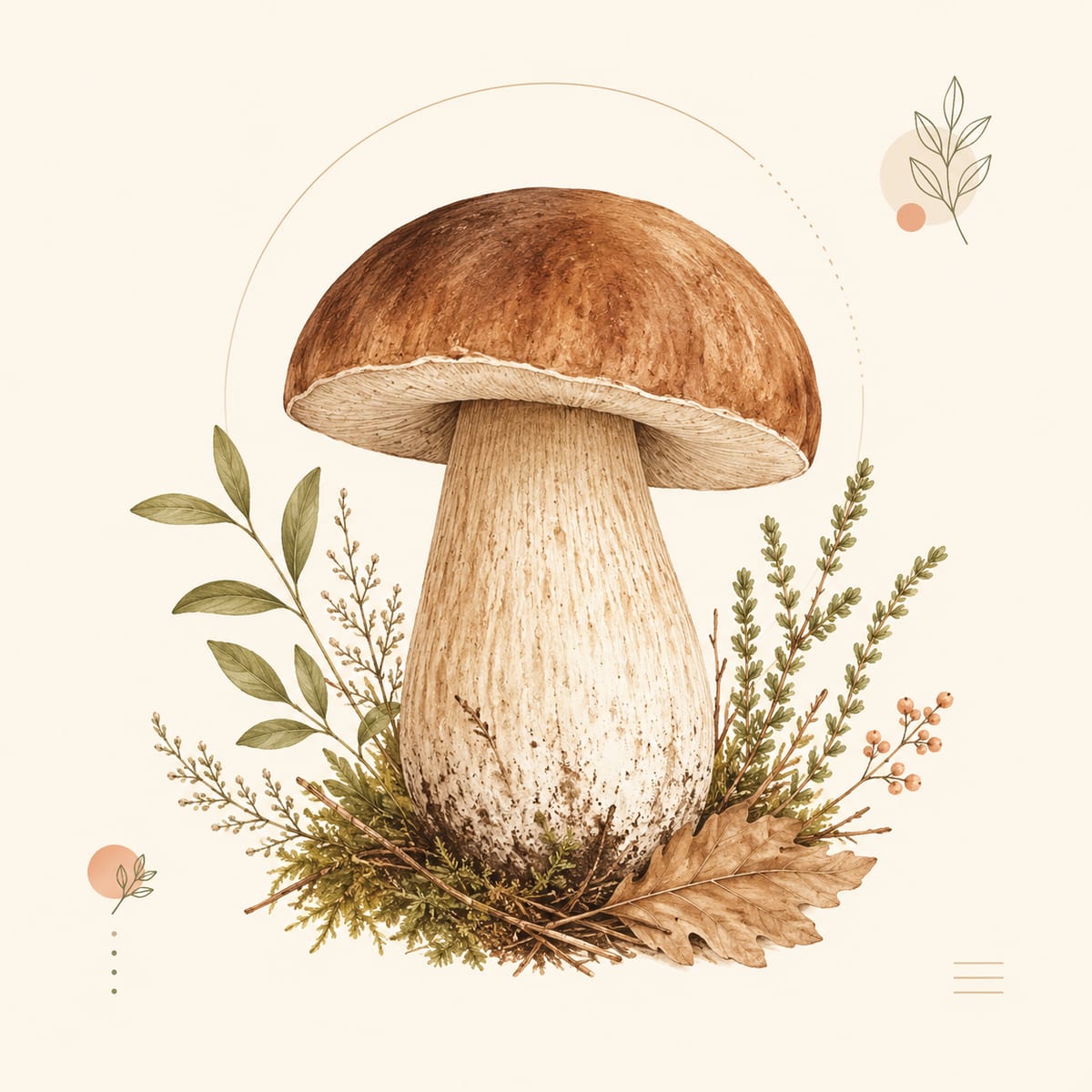
Click "Upload Images" to add up to 6 photos. Capture the cap from above, the full side profile, and the base emerging from the ground. More angles mean a more accurate match.
Flip the cap to show what's beneath — gills, pores, or teeth. This single view is often the fastest way to narrow the species. Tip: a photo in the shade reduces glare on the gills.
Update the Date Found field to the day you spotted it. Seasonality is a key identifier — many species fruit only in spring, summer, or fall, so timing helps rule out look-alikes.
Enter where it was found — a town, park, or trail name is enough. Note nearby trees, ground cover, or whether it was growing on wood or soil. Habitat is often as important as the photo itself.
Press "Identify Mushroom" to start the analysis and review your results. Use them as a starting point only — never make edibility decisions based on an AI result alone. When in doubt, consult a local mycologist.
Ready to identify it?
Upload one or more clear photos to get started.
Use this photo checklist to get accurate mushroom identification from your uploads.
Checklist item includedShoot straight down to show cap color, texture, and any scales or warts.
 Checklist item included
Photograph the underside to show gill attachment or pore or teeth structure.
 Checklist item included
Capture the cap shape and how it meets or attaches to the stem.
 Checklist item included
Include the full stem and base to reveal sacs, rings, or rooting structures.
 Checklist item included
Show the environment: substrate (soil, moss, wood), nearby plants, and growth pattern.
 Checklist item included
Slice in half to show flesh color, hollow vs. solid stem, and hidden veils.
 Checklist item included
Place cap gills-down on white and dark paper for a few hours, then photograph the print.
A modern mushroom identifier uses artificial intelligence trained on hundreds of thousands of labeled fungal specimens. When you upload an image, the system extracts visual features — cap shape, color, surface texture, gill pattern, stem structure — and compares them against a database of known species to return a ranked list of likely matches.
What separates a reliable mushroom identifier from a basic image search is context-awareness. The AI does not simply look at color in isolation; it weighs combinations of structural traits together. A brown cap with free gills and a stem ring tells a very different story than a brown cap with decurrent gills and no ring. These compound patterns allow the model to distinguish species that look nearly identical at a glance.
Location and seasonality data sharpen accuracy further. Many fungi share overlapping ranges, so knowing whether a specimen appeared in a Pacific Northwest conifer forest versus a Midwestern oak woodland meaningfully narrows the candidate pool.
Keep in mind that results reflect visual probability, not certainty. The same species can look dramatically different depending on age, moisture, and elevation. Think of an AI result as the kind of working hypothesis an experienced forager would form in the first few minutes of careful observation — a strong starting point that still needs to be checked against spore print color, bruising reactions, smell, and, when in doubt, advice from a qualified local expert.
The quality and variety of your images are the single biggest factor in getting a precise result from a mushroom identifier. A single overhead shot of the cap rarely contains enough information to distinguish species confidently. A comprehensive set of photos takes about two minutes to capture and makes a substantial difference in accuracy.
Start with the cap. Photograph it from directly above in natural, even light — overcast days are ideal because harsh sunlight creates shadows that obscure surface detail. Then crouch to capture a full side profile showing how the cap edge curls, lifts, or droops.
Turn the mushroom over. The underside — gills, pores, spines, or wrinkles — is frequently the most diagnostic feature of the entire specimen. Get close enough to show the attachment point where the gills or pores meet the stem.
Photograph the stem base. Dig gently around the base before pulling the mushroom out. Some species have a cup-shaped volva or basal bulb that is completely hidden at ground level. Missing this detail can lead to a misread, particularly with Amanita species.
Include a habitat frame. Step back and capture the mushroom in context: surrounding leaf litter, nearby tree trunks, log substrate, or moss. This environmental view is often as revealing as the specimen itself, especially when paired with a location note.
Fungi do not exist in isolation. Nearly every mushroom species has evolved a specific ecological relationship — with particular tree families, soil types, decaying wood, or living root systems — and those relationships are essential context for narrowing down what you have found.
Mycorrhizal species form underground partnerships with trees. Chanterelles, for example, are almost always found near oaks, beeches, or conifers, depending on the region. A look-alike growing in a grassy field far from any trees is almost certainly something different. Noting the dominant tree species within ten meters of your find is one of the most valuable pieces of information you can provide.
Substrate matters just as much. A mushroom growing directly from a living oak tree is in a completely different candidate pool from one growing from buried roots, decaying hardwood logs, or open soil. Wood-rotting species, soil-dwelling species, and dung-loving species rarely overlap, even when they appear superficially similar.
Elevation and climate add another layer. A specimen found at 8,000 feet in a Rocky Mountain spruce forest is unlikely to be the same species as one found in the humid lowlands of Louisiana, even if both share a similar appearance.
When using a mushroom identifier, adding a location and noting the immediate surroundings — even a brief phrase like "base of a dead birch" or "open meadow, Rocky Mountains" — consistently produces more precise matches than images alone.
A mushroom identifier powered by AI is a powerful first step, but understanding its limitations is as important as knowing how to use it well. Visual similarity between species is a fundamental challenge in mycology that even experienced field experts navigate carefully — and AI operates under the same visual constraints.
Some of the most dangerous species in the world — including several Amanita varieties responsible for the majority of fatal mushroom poisonings — closely resemble edible species that beginners actively seek. The death cap (Amanita phalloides) has been mistaken for edible puffballs and oyster mushrooms. The destroying angel (Amanita bisporigera) looks, to the untrained eye, like a common button mushroom just emerging from the ground. No AI in existence can distinguish these pairs with certainty from a photograph alone.
The model also cannot detect smell, spore print color, bruising reactions, or taste — four of the most reliable diagnostic signals in traditional mycology. These require direct, hands-on examination and sometimes laboratory analysis.
What a mushroom identifier does exceptionally well is generate a ranked shortlist of candidates, surface relevant look-alike warnings, and supplement field observation with species-level detail that would otherwise take hours to research on your own. Treat every result as a hypothesis to verify, not a verdict to act on.
If you are ever uncertain — especially about a mushroom you are considering handling, showing to children, or giving to pets — contact a local mycological society or a poison control center.
Put what you’ve learned to use
Upload your photos and compare the suggested match with the features you observed.
Yes, the mushroom identifier is free to use, with a generous daily allowance of identifications and no sign-up required. The tool is designed to be accessible to everyone — casual hikers, foragers, and enthusiasts alike. For unlimited identifications, unlimited AI chat, and the ability to save and organize your collection, you can upgrade to Mushroom Identifier Unlimited.
No account or sign-up is required. Open the page, upload your photos, and get your results immediately. Your images are used solely to process the identification request and are not stored to a personal profile. This makes the tool quick to use whether you are on a trail with limited time or simply exploring from home.
No download is needed. The mushroom identifier is a web-based tool that runs entirely in your browser — on desktop, tablet, or mobile. Just open the page on any modern browser and it works instantly. There is nothing to install, update, or manage on your device.
The AI is trained on hundreds of thousands of labeled fungal specimen images. When you upload photos, the model extracts visual features — cap shape, color, surface texture, gill or pore pattern, stem structure — and compares them against a database of known species. It then returns a ranked list of the most likely matches. Providing location, date, and habitat notes as additional inputs helps the model weigh regionally appropriate species higher in the results.
Accuracy depends heavily on photo quality, the number of angles submitted, and the distinctiveness of the species. Common and visually distinctive species are identified with high confidence when multiple clear photos are provided. Accuracy decreases for species that have many close look-alikes or when only a single, low-quality image is uploaded. For this reason, always treat results as a strong starting hypothesis that still needs to be cross-checked against spore print, smell, bruising behavior, and expert sources.
No — and this distinction is critical. The tool provides species identification information, not an edibility verdict. Many toxic species are visually indistinguishable from edible ones even to experienced foragers. Never consume, handle, or allow pets or children near a wild mushroom solely based on an AI result. If you need a definitive edibility determination, consult a qualified local mycologist or a regional mycological society.
Upload up to 6 photos showing: the cap from directly above, a full side profile, the underside (gills, pores, or teeth), the stem base dug out from the ground, and the surrounding habitat. Natural, even light produces the clearest detail — overcast conditions are ideal. Avoid strong shadows or flash glare, which flatten surface texture and obscure color. If the mushroom has a ring, volva, or any bruising, photograph those features specifically.
Seasonality is one of the most reliable filters in mycology. Many species fruit exclusively in spring, others in late summer or fall, and some only after specific weather conditions such as the first frosts. By entering the date you found the mushroom, the AI can deprioritize species that do not typically fruit at that time of year, reducing false positives and surfacing seasonally appropriate candidates first.
Geographic range dramatically narrows the candidate pool. Many mushroom species are native to specific continents, biomes, or elevation bands and would not appear in regions outside their natural habitat. Beyond geography, the immediate environment matters: mycorrhizal species are tied to specific tree hosts, wood-rotting species require dead or dying substrate, and some species fruit only in particular soil types. Even a brief note — such as "base of a hemlock" or "open meadow after rain" — gives the AI meaningful context.
Yes. Wood-rotting fungi are a large and diverse group, and many of the most distinctive edible and toxic species grow on logs, stumps, or living trees. When submitting photos, include a clear shot showing how the mushroom attaches to the wood — whether it has a stem, grows in shelving clusters, or is directly fused to the surface. In the notes, mention whether the wood appears to be hardwood or conifer, and whether it is a standing dead tree, a fallen log, or a buried root.
The notes field is designed for physical observations that a camera cannot capture: odor (earthy, anise-like, unpleasant), whether the flesh changes color when cut or bruised, the texture of the cap surface (slimy, dry, velvety), the color of any spore print you have taken, and the specific species of nearby trees. These sensory and contextual details are among the most diagnostic in traditional mycology and can meaningfully improve the precision of your result.
The free version includes a generous daily allowance of identifications. Each request is independent, so you can start a new identification at any time by pressing the "New Identification" button after reviewing your results. If you reach the daily cap, Mushroom Identifier Unlimited removes it and adds unlimited AI chat and saved collections.
Ready to give it a try?
Upload your photos for an AI-assisted best match.